Bioreactors for Tissue Engineering: Principles, Design and Operation

Bioreactors for Tissue Engineering: Principles, Design and Operation
Julian Chaudhuri, Mohamed Al-Rubeai, "Bioreactors for Tissue Engineering: Principles, Design and Operation"
Springer; 1 edition (November 28, 2005) | English | 1402037406 | 375 pages | PDF | 12.32 MB

Developments in tissue engineering for human medicine are increasing rapidly. Advances in stem cell biology, biomaterials science and scaffold design underpin this emerging science. An equally important facet of this field is the rational design and operation of bioreactors to control the nascent tissue growth. For the first time in a single volume, the design, characterisation and operation of the bioreactor system in which the tissue is grown is detailed.

Bioreactors for Tissue Engineering presents an overall picture of the current state of knowledge in the engineering of bioreactors for several tissue types (bone, cartilage, vascular), addresses the issue of mechanical conditioning of the tissue, and describes the use of techniques such as MRI for monitoring tissue growth.

Download
Read more >>

Culture of Epithelial Cells by R. Ian Freshney

Culture of Epithelial Cells by R. Ian Freshney

Culture of Epithelial Cells by R. Ian Freshney
Publisher: Wiley-Liss; 2 edition (April 30, 2002) | ISBN: 0471401218 | Pages: 461 | PDF | 23 MB

This completely revised and expanded new edition provides detailed descriptions of fundamental and practical aspects relating to the in vitro cultivation of disparate types of epithelia. In recent years, the use of epithelial cell culture in cell biology and tissue engineering has increased dramatically. This revision reflects those advances by including new chapters on the culture of animal and human hepatocytes, kidney epithelium, and bladder epithelium. Each chapter provides an introductory review of the principles and advantages of the particular method, followed by detailed protocols, practical tips, alternate methods, and a useful list of materials and suppliers.

Download
Link 1
Read more >>

Cell Separation: Fundamentals, Analytical and Preparative Methods


Cell Separation: Fundamentals, Analytical and Preparative Methods 
Publisher: Springer | ISBN: 3540752625 | edition 2007 | PDF | 210 pages | 4,2 mb

Advances in BiochemicalEngineering/Biotechnology reviews actual trends in modern biotechnology. Its aim is to cover all aspects of this interdisciplinary technology where knowledge, methods and expertise are required for chemistry, biochemistry, micro-biology, genetics, chemical engineering and computer science. Special volumes are dedicated to selected topics which focus on new biotechnological products and new processes for their synthesis and purification. They give the state-of-the-art of a topic in a comprehensive way thus being a valuable source for the next 35 years. It also discusses new discoveries and applications. Special volumes are edited by well known guest editors who invite reputed authors for there view articles in their volumes.


Download
Link 1
or
Link 2
Read more >>

Stem Cells & Regenerative Medicine: From Molecular Embryology to Tissue Engineering


Stem Cells & Regenerative Medicine: From Molecular Embryology to Tissue Engineering (Stem Cell Biology and Regenerative Medicine)
H P; 1st Edition. edition (November 1, 2010) | ISBN: 1607618591 1607618605 | 632 pages | PDF | 11 MB

Defined as, “The science about the development of an embryo from the fertilization of the ovum to the fetus stage,” embryology has been a mainstay at universities throughout the world for many years. Throughout the last century, embryology became overshadowed by experimental-based genetics and cell biology, transforming the field into developmental biology, which replaced embryology in Biology departments in many universities. Major contributions in this young century in the fields of molecular biology, biochemistry and genomics were integrated with both embryology and developmental biology to provide an understanding of the molecular portrait of a “development cell.” That new integrated approach is known as stem-cell biology; it is an understanding of the embryology and development together at the molecular level using engineering, imaging and cell culture principles, and it is at the heart of this seminal book. Stem Cells and Regenerative Medicine: From Molecular Embryology to Tissue Engineering is completely devoted to the basic developmental, cellular and molecular biological aspects of stem cells as well as their clinical applications in tissue engineering and regenerative medicine. It focuses on the basic biology of embryonic and cancer cells plus their key involvement in self-renewal, muscle repair, epigenetic processes, and therapeutic applications. In addition, it covers other key relevant topics such as nuclear reprogramming induced pluripotency and stem cell culture techniques using novel biomaterials. A thorough introduction to stem-cell biology, this reference is aimed at graduate students, post-docs, and professors as well as executives and scientists in biotech and pharmaceutical companies.


Download
Link 1
Read more >>

Cell Culture and Upstream Processing


Cell Culture and Upstream Processing
Taylor & Francis | May 25, 2007 | ISBN-10: 0415399696 | 250 pages | PDF | 2.4 MB

Upstream processing refers to the production of proteins by cells genetically engineered to contain the human gene which will express the protein of interest. The demand for large quantities of specific proteins is increasing the pressure to boost cell culture productivity, and optimizing bioreactor output has become a primary concern for most pharmaceutical companies. Each chapter in Cell Culture and Upstream Processing is taken from presentations at the highly acclaimed IBC conferences as well as meetings of the European Society for Animal Cell Technology (ESACT) and Protein Expression in Animal Cells (PEACe) and describes how to improve yield and optimize the cell culture production process for biopharmaceuticals, by focusing on safety, quality, economics and operability and productivity issues.


Download
Link 1
or
Link 2
Read more >>

Cell Culture for Biochemists (Laboratory Techniques in Biochemistry and Molecular Biology) (v. 8)


Roger Lionel Poulter Adams, "Cell Culture for Biochemists (Laboratory Techniques in Biochemistry and Molecular Biology) (v. 8)"
Publisher: Elsevier Science | ISBN: 0444813063 | edition 2010 | PDF | 383 pages | 13,6 mb

This 2nd revised edition equals the popular 1st edition in providing a clear and detailed overview of cell culture. It presents information on: characteristics of cultured cells; culture vessels; glassware preparation and sterilisation techniques; subculturing; primary cells; cell culture media; techniques; contamination; the cell cycle; cell synchronisation; use of radioactive isotopes in cell culture; cell mutants and cell hybrids; viruses; and differentiation in cell cultures.


Download
Link 1
or
Link 2
Read more >>

Introduction to Cell and Tissue Culture: Theory and Technique


Jennie P. Mather, Penelope E. Roberts, "Introduction to Cell and Tissue Culture: Theory and Technique"
Springer | English | 1998 | ISBN: 0306458594 | PDF | 314 Pages | 4 MB

Written for both novices and experts, this handy paperback describes modern tissue culture methods within a conceptual framework of cell biology, genetics, nutrition, endocrinology, and physiology. The book's unique contribution is its rendering of technical cell culture information in a comprehensive, logical format. Troubleshooting problems are approached from a theoretical perspective, helping the reader to understand and surpass the examples given, while exercises and techniques stimulate thought about the broader aspects of cell culture. Nearly 100 illustrations, including 41 halftones, highlight the book. Appendices include references to relevant Internet sites and other useful sources of information.
Download
Read more >>

Endothelial Cell Culture (Handbooks in Practical Animal Cell Biology)


Roy Bicknell, "Endothelial Cell Culture (Handbooks in Practical Animal Cell Biology)"
Cambridge University Press | ISBN: 0521559901 | January 12, 2008 | 152 pages | PDF | 8.1 MB

Endothelial Cell Culture contains chapters by experts on endothelial cells derived from the lung, bone marrow, brain, mammary glands, skin, adipose tissue, female reproductive system, and synovium.

Read more >>

Medicines from Animal Cell Culture


Medicines from Animal Cell Culture
John Wiley & Sons | 0470850949 | Edition - 2007-10-05 | PDF | 672 pages | 6.9 MB | Rapidshare & Megaupload&Aliceinwire

Medicines from Animal Cell Culture focuses on the use of animal cell culture, which has been used to produce human and veterinary vaccines, interferon, monoclonal antibodies and genetically engineered products such as tPA and erythropoietin. It also addresses the recent dramatic expansion in cell-based therapies, including the use of live cells for tissue regeneration and the culture of stem cells.

Medicines from Animal Cell Culture:

* Provides comprehensive descriptions of methods for cell culture and nutrition as well as the technologies for the preservation and characterisation of both the cells and the derived products
* Describes the preparation of stem cells and others for use in cell-based therapies – an area of burgeoning research
* Includes experimental examples to indicate expected results
* Covers regulatory issues from the UK, the EU and the USA and reviews how these are developing around the world
* Addresses the key issues of standardisation and validation with chapters on GLP and GMP for cell culture processes

Delivering insight into the exciting world of biological medicines and directions for further investigation into specific topics, Medicines from Animal Cell Culture is an essential resource for researchers and technicians at all levels using cell culture within the pharmaceutical, biotechnology and biomedical industries. It is of value to laboratory managers in these industries and to all those interested in this topic alike.


Read more >>

Principles Of Animal Cell Culture (students Compendium)


Principles Of Animal Cell Culture (students Compendium) By Dr. Basant K. Sinha & Dr. Rinesh Kumar
International Book Distributing Co. | English | 2008 | ISBN: 818189250X | 305 Pages | PDF | 13.3 MB

Animal cell culture is playing a pivotal role in the various modern researches. Though the foundation stone of animal cell culture was laid for the isolation and characterization of different viruses but the recent developments in the field of biotechnology and molecular biology have given various new dimensions to this technology. Cell culture has provided a new tool for the better understanding of diagnosis and molecular biology in many areas of biological systems including bacterial, viral and parasitic diseases. The different cell cultures are being used in virology for the last five decades and one of its application has been utilized successfully in various types of vaccine production. To quote virologist Payton Rous of late we have begun to study viruses not only for what they themselves mean, but for what they can reveal about the intrinsic cell structure, and functions through located injuries that they do". More recent discoveries such as production of various proteins and enzymes through recombinant DNA technology require the use of cell culture to study the exact gene expression, have fully utilized where the available evidences justify it and where their use is consistent with the effort involved and their routine application is recommended. With the advancement in tissue culture technology, scientists are now on the threshold of bringing sea changes in improving the life of human as well as livestock and thus it has become a source of unending fascination for different scientists.

The present work is directed primarily to the students of biotechnology, keeping in view the University Grants Commission Syllabus on animal cell culture prescribed for vocational course both for undergraduate and postgraduate students and also for the scientists in the medical, veterinary and biological sciences, whose curiosity and efforts are responding to the stimulus of current interest in biotechnology.

It is hoped that it may have some value as a source of providing more readily obtained information on different topics. It is expected that some deficiencies might have persisted in this book, it is anticipated that these deficiencies may be eliminated by diligent supplementing readings and by classroom lecture materials. Though this is the first endeavour, constructive criticism will be welcomed by the author to be included in the next edition.
Contents: 1. History of development of cell culture. 2. Natural surroundings of animal cell. 3. Metabolic capabilities of animal cell. 4. Simulating natural conditions for growing animal cells. 5. Serum and serum free media. 6. Cell culture system. 7. Secondary culture: transformed animal cell. 8. Commonly used cell lines and their uses. 9. Growth kinetics of cells in culture. 10. Gene expression and application of animal cell culture for its studies. 11. Organ culture. 12. Transfection. 13. Cell fusion. 14. Selectable marker and antibiotic resistance. 15. Hybridoma and monoclonal antibodies. 16. Transplantation of cultured cell. 17. Differentiation of cells. 18. Transgenesis and transgenic animals. 19. Apoptosis, necrosis, senescence and quiescence. 20. Embryo transfer technology. References. Index.


Read more >>

Culture of Human Tumor Cells (Culture of Specialized Cells) By Roswitha Pfragner, R. Ian Freshney


Publisher: Wiley-Liss
Number Of Pages: 435
Publication Date: 2003-11-21
ISBN-10 / ASIN: 0471438537
ISBN-13 / EAN: 9780471438533
Binding: Paperback


Book Description:
This comprehensive resource provides stepwise protocols for the in vitro cultivation of the major types of human tumors. Written in a reader-friendly style, this book is organized by specific tumor, discussing cultures for lung, gastric, colorectal, pancreas, bladder, prostate, ovary, cervix, mammary carcinoma, myoepithelium, squamous, melanoma, lymphoma, glioma, and neuroendocrine tumors. Detailed techniques for initiation, propagation, and characterization of established cell lines are presented. Drug treatment, selection, differentiation, assays for malignant cells, risks, and applications are discussed. An extensive listing of vendors for equipment and other cell culture products is also included.
Download

Link 1

Link 2

Link 3

Link 4

Link 5


.
Read more >>

Culture of Cells for Tissue Engineering (Culture of Specialized Cells) By Gordana Vunjak-Novakovic, R. Ian Freshney


Publisher: Wiley-Liss
Number Of Pages: 528
Publication Date: 2006-02-03
ISBN-10 / ASIN: 0471629359
ISBN-13 / EAN: 9780471629351
Binding: Paperback


Product Description:
Step-by-step, practical guidance for the acquisition, manipulation, and use of cell sources for tissue engineering Tissue engineering is a multidisciplinary field incorporating the principles of biology, chemistry, engineering, and medicine to create biological substitutes of native tissues for scientific research or clinical use. Specific applications of this technology include studies of tissue development and function, investigating drug response, and tissue repair and replacement. This area is rapidly becoming one of the most promising treatment options for patients suffering from tissue failure. Written by leading experts in the field, Culture of Cells for Tissue Engineering offers step-by-step, practical guidance for the acquisition, manipulation, and use of cell sources for tissue engineering. It offers a unique focus on tissue engineering methods for cell sourcing and utilization, combining theoretical overviews and detailed procedures.


Download
Link (fileit)
or
Link (Medaupload)
or
Link (Rapidshare)
Read more >>

Culture of Human Stem Cells


Culture of Human Stem Cells
Wiley-Liss | 0470052465 | Edition - June 22, 2007 | PDF | 343 pages |10 MB| Rapidshare&Megaupload

This book collects and focuses on commonly used and cutting-edge methods and protocols for deriving and culturing human embryonic and adult stem cells. It presents clear, concise information that is immediately useful and applicable. Each methods and protocols chapter is laid out exactly like the next, with stepwise protocols, preceded by specific requirements for that protocol, and a concise discussion of methods illustrated by data. Each chapter includes a comprehensive list of suppliers for all equipment used in the protocols presented, with complete contact information for the suppliers in a special appendix at the end of the book. Culture of Human Stem Cells also includes three general chapters on quality control, legal and ethical issues, and cryopreservation.

This concise, one-stop resource is an invaluable introduction to the field of stem cell biology and culture for all researchers and clinical scientists with interests in tissue replacement therapies. It is also an essential textbook for teachers and students who are involved with this fascinating and crucial area of study and the therapeutic potential of stem cell research.

Read more >>

Fundamentals of Tissue Engineering and Regenerative Medicine


Ulrich Meyer, Thomas Meyer, Jorg Handschel, Hans Peter Wiesmann, "Fundamentals of Tissue Engineering and Regenerative Medicine"
Springer | 2009-04 | ISBN: 3540777547 | 1076 pages | PDF | 22,7 MB

"Fundamentals of Tissue Engineering and Regenerative Medicine" provides a complete overview of the state of the art in tissue engineering and regenerative medicine. Tissue engineering has grown tremendously during the past decade. Advances in genetic medicine and stem cell technology have significantly improved the potential to influence cell and tissue performance, and have recently expanded the field towards regenerative medicine. In recent years a number of approaches have been used routinely in daily clinical practice, others have been introduced in clinical studies, and multitudes are in the preclinical testing phase. Because of these developments, there is a need to provide comprehensive and detailed information for researchers and clinicians on this rapidly expanding field.

This book offers, in a single volume, the prerequisites of a comprehensive understanding of tissue engineering and regenerative medicine. The book is conceptualized according to a didactic approach (general aspects: social, economic, and ethical considerations; basic biological aspects of regenerative medicine: stem cell medicine, biomolecules, genetic engineering; classic methods of tissue engineering: cell, tissue, organ culture; biotechnological issues: scaffolds; bioreactors, laboratory work; and an extended medical discipline oriented approach: review of clinical use in the various medical specialties). The content of the book, written in 68 chapters by the world’s leading research and clinical specialists in their discipline, represents therefore the recent intellect, experience, and state of this bio-medical field.

Download

Read more >>

Stem Cells & Regenerative Medicine: From Molecular Embryology to Tissue Engineering


Stem Cells & Regenerative Medicine: From Molecular Embryology to Tissue Engineering (Stem Cell Biology and Regenerative Medicine)
Humana Press; 1st Edition. edition (November 1, 2010) | ISBN: 1607618591 1607618605 | 632 pages | PDF | 11 MB

Defined as, “The science about the development of an embryo from the fertilization of the ovum to the fetus stage,” embryology has been a mainstay at universities throughout the world for many years. Throughout the last century, embryology became overshadowed by experimental-based genetics and cell biology, transforming the field into developmental biology, which replaced embryology in Biology departments in many universities. Major contributions in this young century in the fields of molecular biology, biochemistry and genomics were integrated with both embryology and developmental biology to provide an understanding of the molecular portrait of a “development cell.” That new integrated approach is known as stem-cell biology; it is an understanding of the embryology and development together at the molecular level using engineering, imaging and cell culture principles, and it is at the heart of this seminal book. Stem Cells and Regenerative Medicine: From Molecular Embryology to Tissue Engineering is completely devoted to the basic developmental, cellular and molecular biological aspects of stem cells as well as their clinical applications in tissue engineering and regenerative medicine. It focuses on the basic biology of embryonic and cancer cells plus their key involvement in self-renewal, muscle repair, epigenetic processes, and therapeutic applications. In addition, it covers other key relevant topics such as nuclear reprogramming induced pluripotency and stem cell culture techniques using novel biomaterials. A thorough introduction to stem-cell biology, this reference is aimed at graduate students, post-docs, and professors as well as executives and scientists in biotech and pharmaceutical companies.

Download

Link 1
Read more >>

Medicines from Animal Cell Culture


Medicines from Animal Cell Culture
John Wiley & Sons | 0470850949 | Edition - 2007-10-05 | PDF | 672 pages | 6.9 MB | Rapidshare & Megaupload & Aliceinwire

Medicines from Animal Cell Culture focuses on the use of animal cell culture, which has been used to produce human and veterinary vaccines, interferon, monoclonal antibodies and genetically engineered products such as tPA and erythropoietin. It also addresses the recent dramatic expansion in cell-based therapies, including the use of live cells for tissue regeneration and the culture of stem cells.


Medicines from Animal Cell Culture:
* Provides comprehensive descriptions of methods for cell culture and nutrition as well as the technologies for the preservation and characterisation of both the cells and the derived products
* Describes the preparation of stem cells and others for use in cell-based therapies – an area of burgeoning research
* Includes experimental examples to indicate expected results
* Covers regulatory issues from the UK, the EU and the USA and reviews how these are developing around the world
* Addresses the key issues of standardisation and validation with chapters on GLP and GMP for cell culture processes

Delivering insight into the exciting world of biological medicines and directions for further investigation into specific topics, Medicines from Animal Cell Culture is an essential resource for researchers and technicians at all levels using cell culture within the pharmaceutical, biotechnology and biomedical industries. It is of value to laboratory managers in these industries and to all those interested in this topic alike.


Download


Read more >>

Principles Of Animal Cell Culture (students Compendium)


Principles Of Animal Cell Culture (students Compendium) By Dr. Basant K. Sinha & Dr. Rinesh Kumar
International Book Distributing Co. | English | 2008 | ISBN: 818189250X | 305 Pages | PDF | 13.3 MB

Animal cell culture is playing a pivotal role in the various modern researches. Though the foundation stone of animal cell culture was laid for the isolation and characterization of different viruses but the recent developments in the field of biotechnology and molecular biology have given various new dimensions to this technology. Cell culture has provided a new tool for the better understanding of diagnosis and molecular biology in many areas of biological systems including bacterial, viral and parasitic diseases. The different cell cultures are being used in virology for the last five decades and one of its application has been utilized successfully in various types of vaccine production. To quote virologist Payton Rous of late we have begun to study viruses not only for what they themselves mean, but for what they can reveal about the intrinsic cell structure, and functions through located injuries that they do". More recent discoveries such as production of various proteins and enzymes through recombinant DNA technology require the use of cell culture to study the exact gene expression, have fully utilized where the available evidences justify it and where their use is consistent with the effort involved and their routine application is recommended. With the advancement in tissue culture technology, scientists are now on the threshold of bringing sea changes in improving the life of human as well as livestock and thus it has become a source of unending fascination for different scientists.

The present work is directed primarily to the students of biotechnology, keeping in view the University Grants Commission Syllabus on animal cell culture prescribed for vocational course both for undergraduate and postgraduate students and also for the scientists in the medical, veterinary and biological sciences, whose curiosity and efforts are responding to the stimulus of current interest in biotechnology.

It is hoped that it may have some value as a source of providing more readily obtained information on different topics. It is expected that some deficiencies might have persisted in this book, it is anticipated that these deficiencies may be eliminated by diligent supplementing readings and by classroom lecture materials. Though this is the first endeavour, constructive criticism will be welcomed by the author to be included in the next edition.

Contents: 1. History of development of cell culture. 2. Natural surroundings of animal cell. 3. Metabolic capabilities of animal cell. 4. Simulating natural conditions for growing animal cells. 5. Serum and serum free media. 6. Cell culture system. 7. Secondary culture: transformed animal cell. 8. Commonly used cell lines and their uses. 9. Growth kinetics of cells in culture. 10. Gene expression and application of animal cell culture for its studies. 11. Organ culture. 12. Transfection. 13. Cell fusion. 14. Selectable marker and antibiotic resistance. 15. Hybridoma and monoclonal antibodies. 16. Transplantation of cultured cell. 17. Differentiation of cells. 18. Transgenesis and transgenic animals. 19. Apoptosis, necrosis, senescence and quiescence. 20. Embryo transfer technology. References. Index.

Download
Filesonic
Read more >>

Cell and Tissue Culture: Laboratory Procedures


Cell and Tissue Culture: Laboratory Procedures
Wiley | December 16, 1998 | ISBN-10: 0471982555 | 352 pages | PDF | 39.56 mb

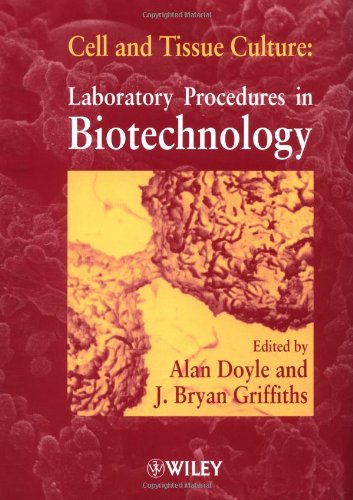
Cell and Tissue Culture: Laboratory Procedures in Biotechnology Edited by Alan Doyle Centre for Applied Microbiology & Research, Porton Down, Salisbury, UK. and J. Bryan Griffiths Scientific Consultancy & Publishing, Porton, Salisbury, UK. Cell and Tissue Culture: Laboratory Procedures in Biotechnology introduces the reader to animal cell culture methods describing the key cells, core techniques, how to scale up the culture for commercial production, and regulatory aspects. This book provides easy to follow, step-by-step protocols, with trouble-shooting tips and notes on time considerations. Alternative procedures, background information and references supplement the main procedures described. Other features include:

* Experimental examples to indicate expected results;
* Quick reference symbols such as safety icons with warning notes; and,
* A list of suppliers is provided to allow easy access to laboratory products.

Written by a team of international scientists, Cell and Tissue Culture: Laboratory Procedures in Biotechnology will be of interest to researchers, technicians and process engineers using cell culture within the biotechnology, biomedicine and pharmaceutical industrie


Download
Read more >>